
Keroncong-pop fusion is easiest to recognize when you hear an offbeat rhythmic pulse and acoustic string texture inside a familiar pop song structure.
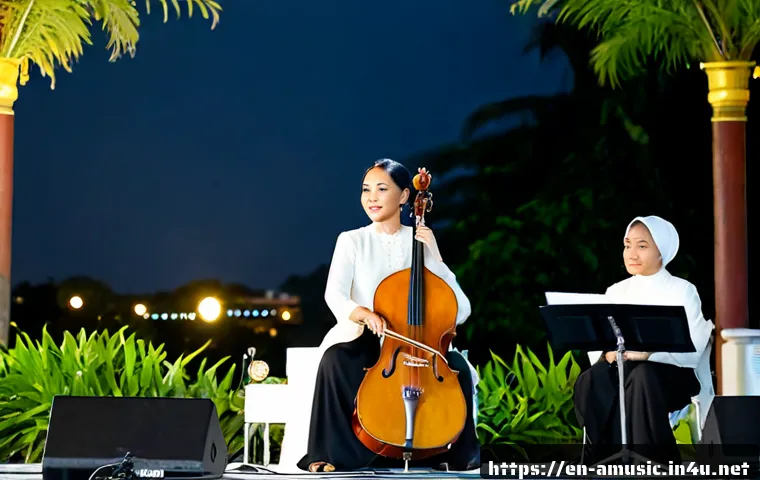
The crossover may be subtle or deeply integrated, so it helps to listen separately for rhythm, instrumentation, vocal delivery, and studio production.
For listeners, this approach makes Indonesian traditional-pop crossover easier to place in playlists without flattening it into a generic “world music” category.
For musicians and organizers, the same listening cues can guide choices about session players, recording studios, instrument rentals, and music licensing.
There is no single formula that makes every recording keroncong-pop. A song may borrow one recognizable color, use a traditional-style rhythmic foundation, or build its entire arrangement around acoustic ensemble interaction.
Checking credits and performance context remains important before making a firm stylistic label.
At a Glance
- Listen first for an offbeat pulse, interlocking string texture, and a song form that feels familiar to pop listeners.
- Keroncong-pop can range from a traditional-leaning acoustic arrangement to polished studio pop with only selective references.
- Before labeling, programming, or licensing a track, check instrumentation, credits, and performance context.
| Arrangement approach | Depth of keroncong presence | Likely production needs | Suitable use |
|---|---|---|---|
| Traditional-leaning pop song | Rhythm and acoustic ensemble are central | Rehearsal time and traditional instrumental collaboration may matter | Heritage-focused listening, classroom discussion, cultural programming |
| Acoustic pop with keroncong-style support | Rhythmic texture supports a broadly accessible song | Acoustic recording, arrangement planning, selected session musicians | Contemporary playlists, intimate live events, educational listening |
| Modern studio pop with selective references | A few colors or gestures appear within pop production | Producer-led workflow, sound selection, careful credit review | Wide-reach playlists, media concepts, crossover discovery |
What Keroncong-Pop Fusion Sounds Like
The quick listening answer: traditional pulse, familiar pop structure
The quickest way to approach keroncong-pop is to separate the arrangement into two questions: what creates the groove, and how is the song organized? A crossover can retain an offbeat rhythmic feel and acoustic string interplay while moving through verses, choruses, hooks, and production choices associated with contemporary pop.
This combination is useful for listeners who want an entry point without assuming that every Indonesian pop track with an acoustic instrument belongs in the same category. The traditional character may sit in the accompaniment rather than in the melody, while the pop character may come from the vocal approach, song structure, or recording style.
Why “fusion” can mean different things across recordings
Fusion is a spectrum, not a fixed label. One arrangement may place keroncong-style rhythmic interaction at its center. Another may use an acoustic color briefly in an otherwise modern pop production. Both can invite comparison, but they do not represent the same degree of stylistic integration.
For a playlist curator or educator, describe what is actually audible instead of applying a broad label too quickly. Phrases such as “keroncong-informed rhythm,” “acoustic crossover arrangement,” or “selective keroncong reference” can be more accurate when full credits or stylistic intent have not been verified.
Core Keroncong Elements That Often Remain in Pop Arrangements
Rhythmic accompaniment and interlocking string textures
A key listening cue is the relationship between rhythm and strings. Rather than treating acoustic accompaniment as a single background layer, listen for parts that answer, overlap, or lock together to create motion. In a pop setting, this texture may be simplified so that the vocal hook remains prominent.
Do not assume that an acoustic guitar alone confirms a keroncong approach. The useful question is whether the accompaniment creates a recognizable rhythmic role and interaction, not merely whether the production includes strings.
Acoustic color, melodic phrasing, and vocal character
Acoustic timbre can make a crossover feel warm, intimate, or rooted in ensemble performance. Melodic phrasing and vocal delivery may also shape the result, but neither should be treated as a shortcut for assigning a genre. A singer can use a contemporary pop vocal style over a traditional-leaning backing, or the reverse.
For classroom listening, ask learners to identify what stays consistent when the vocal becomes more pop-oriented. This keeps the discussion focused on arrangement choices instead of reducing the music to surface-level cultural imagery.
What may change when producers target a pop audience
Producers may emphasize a clear chorus, tighter song sections, layered vocal production, a stronger low end, or more controlled studio texture. These choices can improve accessibility for a contemporary playlist, but they can also move the arrangement further from an acoustic ensemble feel.
The important distinction is not whether the production is “traditional” or “modern.” It is whether the traditional rhythmic and instrumental ideas remain meaningful parts of the arrangement rather than decorative moments added without context.
Fusion Approaches to Compare When Listening
Traditional keroncong with a pop-oriented song form
In this approach, the ensemble character and rhythmic foundation remain highly audible, while the song may use concise sections or a memorable refrain. This can be a strong fit for heritage-centered programming because listeners can hear the arrangement logic clearly.
Curators should still check the recording credits and artist description. A familiar pop structure does not automatically define the track as keroncong-pop.
Acoustic pop supported by keroncong-style rhythm
Here, the pop song may lead the listener’s first impression, while the accompaniment supplies a keroncong-informed pulse and acoustic movement. This is often an approachable format for listeners new to Indonesian crossover music because the structure feels immediately navigable.
For live events, this route can work well when the program needs accessible material without removing the value of ensemble detail. The arranger should decide early whether the rhythm is a central identity or a light supporting feature.
Modern studio pop that references keroncong selectively
A studio-focused track may include selected acoustic gestures, rhythmic references, or brief instrumental colors within a larger pop framework. Such work can be effective for discovery playlists, but it requires careful wording. Calling it “keroncong-pop” may be too broad if the connection is limited to a short passage or a sampled-style sound.
When evaluating a recorded production, verify whether traditional instruments were played live, recreated with modern substitutes, or represented through samples. That detail cannot be assumed from the sound alone.
Related crossover styles that should not be treated as identical
Indonesian crossover music contains multiple directions, and keroncong-pop is not a catch-all category. A recording may align more closely with another style, even when it shares acoustic instruments, local references, or a mixed traditional-modern identity.
This matters for metadata, event notes, and licensed music searches. Accurate language helps listeners find what they seek and respects the distinct musical logic of each style.
Evaluating Examples Without Mislabeling the Music
Check instrumentation, credits, and performance context
Start with available official information: performer credits, arrangement notes, instrument listings, and the context in which the work is presented. These details can clarify whether an arrangement uses live traditional instrumentalists, sampled textures, or contemporary substitutions.

For a music licensing decision, also review the permitted use, territory, edit rights, and attribution requirements on the relevant licensing page. Streaming availability does not by itself confirm that a track is cleared for an event, video, or commercial project.
Distinguish influence from full stylistic integration
A brief rhythmic gesture can show influence. A full arrangement in which rhythmic roles, acoustic texture, and ensemble interaction shape the whole song suggests deeper integration. Neither is inherently better; they simply serve different listening and production goals.
This distinction helps independent musicians spend wisely. If the project only needs a subtle reference, a focused arrangement consultation may be more appropriate than building a full ensemble session. If the musical identity depends on the interaction, live collaboration may add much more value.
Avoid reducing Indonesian music to a single “exotic” sound
Describe musical details rather than using vague labels. Mention the audible pulse, string texture, pop structure, vocal production, or ensemble role. This gives international audiences a clearer listening path and avoids treating a wide range of Indonesian music as one interchangeable sound.
Arrangement and Production Choices for Musicians and Curators
When live traditional instrumentalists add meaningful value
Live players are especially worth considering when the arrangement depends on interlocking parts, responsive timing, and acoustic ensemble character. They can also help shape phrasing and performance choices that are difficult to infer from a generic sound library.
That does not mean every project requires a full live session. A smaller collaboration can be appropriate for an acoustic-pop arrangement, while a producer-led track may use selective references with transparent credits and respectful framing.
Budget, rehearsal, recording, and licensing questions to ask
Before committing to a version, clarify the practical scope: Which instruments are essential? Is rehearsal needed before recording? Will the recording studio accommodate acoustic capture and ensemble communication? Who approves the final arrangement and receives credit?
If you are comparing recording studios, session musicians, or instrument rentals, prioritize clear descriptions of the service, communication expectations, recording deliverables, and usage terms. For released work, confirm music licensing options before assuming that a recording can be reused in branded media or public programming.
Playlist, educational, live-event, and media-use considerations
A playlist needs accurate description and a coherent listening transition. An educational setting benefits from short listening prompts that direct attention to rhythm, texture, and structure. A live event needs an arrangement that matches the available performers, rehearsal time, and audience expectations.
Media use adds another layer: the most suitable track artistically may not be available under the needed license. Treat artistic selection and usage permission as separate checks.
Choosing an Arrangement Approach: Comparison Summary
Best fit for heritage-focused listening
Choose a traditional-leaning approach when the goal is to foreground acoustic ensemble interaction and rhythmic identity. Look for documented instrumentation and performers who can shape the arrangement collaboratively.
Best fit for accessible contemporary playlists
Choose acoustic pop with a clear keroncong-style rhythmic role when listeners need a familiar song structure alongside meaningful traditional texture. Keep the program note precise: explain what the track uses rather than overstating the label.
Best fit for commissioned recordings and cultural events
Choose the production depth according to the event’s purpose, available rehearsal time, performer access, and intended future use. Compare recording studios, session musicians, instrument rental options, and music licensing terms before finalizing the concept. For official availability and detailed conditions, check the relevant provider or rights-holder page.
Closing Thoughts
Keroncong-pop fusion becomes easier to understand when you listen beyond the chorus. Focus on the pulse, the role of acoustic strings, and the balance between ensemble character and pop production. A careful description is more valuable than a broad genre claim, especially when credits and context are incomplete. For musicians and curators, the best choice is the one that matches the intended listening experience while respecting the music’s specific identity.
Useful Information to Keep in Mind
Listening tip: Try one pass focused only on rhythm, then another focused only on texture.
Programming tip: Use descriptive playlist notes when genre classification is uncertain.
Production tip: Decide whether live interaction is essential before booking a studio session.
Rights tip: Separate the question of artistic fit from the question of licensing permission.
Important Considerations
Specific recordings should not be classified as keroncong-pop without checking reliable credits, artist descriptions, and performance context. Release details, personnel, streaming access, and licensing terms can change and should be verified directly. It is also not possible to determine from sound alone whether a traditional instrument was recorded live, sampled, or replaced with a modern substitute.
Frequently Asked Questions
Q1. What makes a song keroncong-pop rather than simply Indonesian pop?
A1. A keroncong-pop description is most useful when a song combines recognizable keroncong-related rhythmic or acoustic string traits with a pop-oriented structure, vocal style, or production approach. The depth of integration varies, so credits and context should support the label.
Q2. Are live keroncong musicians necessary for a credible pop fusion recording?
A2. Not in every case. Live musicians can be especially valuable when the arrangement relies on interlocking parts, responsive ensemble timing, and acoustic detail. A more selective pop reference may use a different workflow, but the production should be transparent about what was used.
Q3. What should a curator check before adding keroncong-influenced music to a playlist or event program?
A3. Check the track’s credits, available artist information, instrumentation, and performance context. For an event or media use, also confirm music licensing terms and describe the music with language that reflects the actual arrangement rather than a broad assumption.